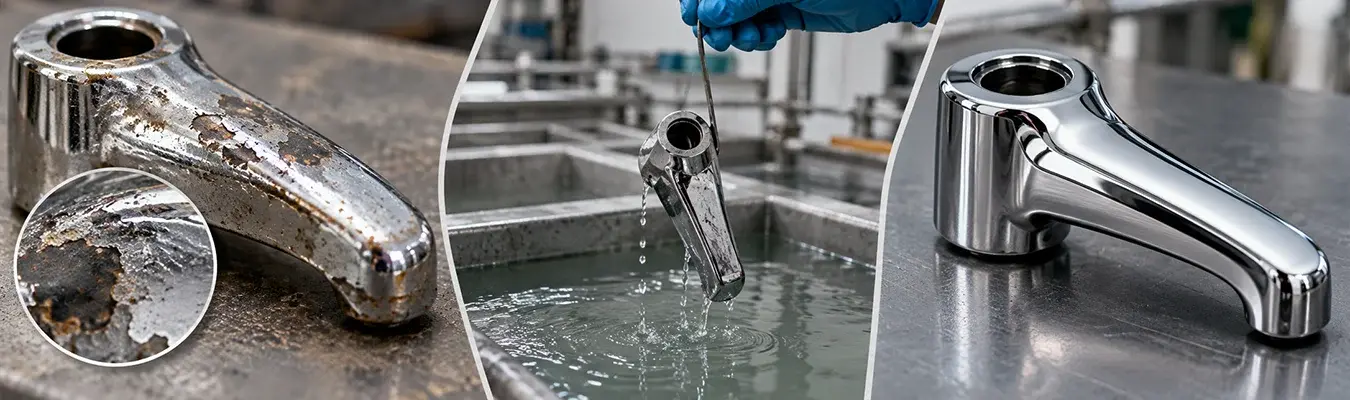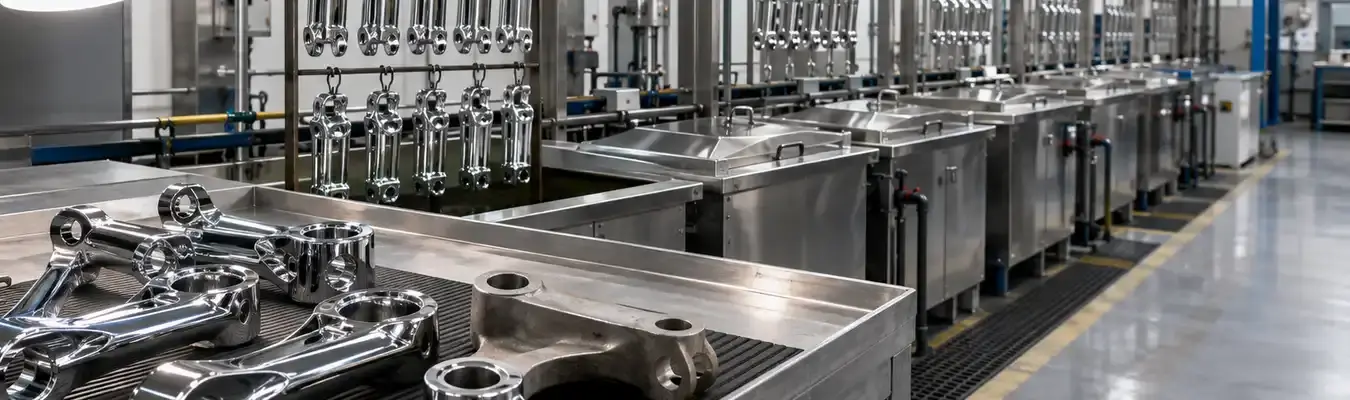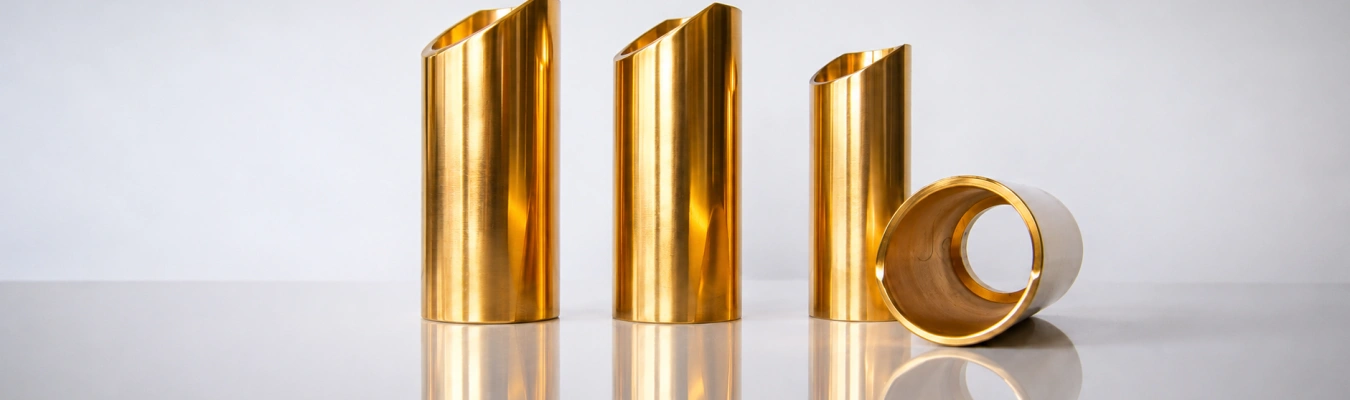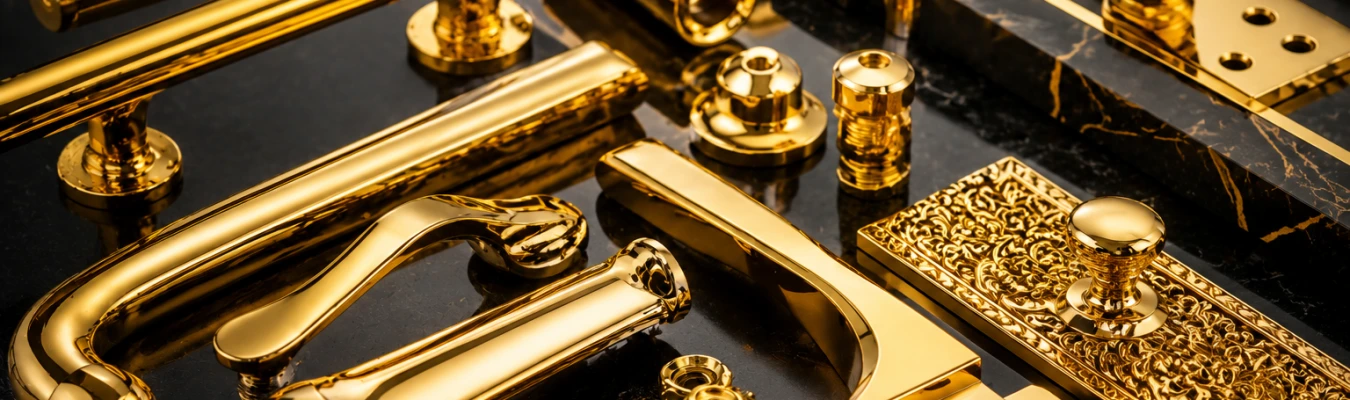
Most finishing failures on fabricated metal start before the finish is applied.
Metal fabrication finishing, also called metal finishing or metal surface finishing, is the surface treatment applied after cutting, bending, and welding. It protects the part from corrosion and gives it the look you need. The right finish depends on three things: the base metal, the environment, and how the part was welded and shaped.
At Al Asriah Metal Coating in Sharjah, we fabricate steel, aluminium, brass, and copper parts and finish them with galvanizing, plating, buffing, and polishing. We offer metal surface finishing in Sharjah, Dubai, and across the UAE.
See our metal fabrication works for what we build. This guide explains how to match the finish to the part.
In This Article
- What Is Metal Fabrication Finishing?
- Which Finish Suits Fabricated Metal?
- How Does the Environment Change the Choice?
- How Do Welding and Design Affect the Finish?
- What Should You Tell Your Finisher?
- Frequently Asked Questions
What Is Metal Fabrication Finishing?
Finishing is the last stage of fabrication, and it decides how the part ages.
A finish protects the metal from corrosion, wear, and weather, and it sets the appearance, from bright and polished to dull and brushed. It goes on after the part is cut, bent, and welded, because fabrication changes the surface the finish has to bond to.
Metal surface processing starts with cleaning. Oil, scale, and weld residue come off before any coating goes on.
The American Galvanizers Association notes that hot-dip galvanizing is meant for parts already in their final shape. Further fabrication afterwards can harm the coating.
The choice of finish then depends on the job.
Which Finish Suits Fabricated Metal?
Each finish solves a different problem, and finishing steel calls for a different system than finishing aluminium or brass.
| Finish | Best for | Watch for |
|---|---|---|
| Galvanizing | Structural steel, frames, and fasteners outdoors | Needs vent and drain holes and clean welds |
| Liquid paint | Colour and an added barrier on steel | Edges and welds are the first points to fail |
| Powder coating | Durable, coloured finishes on steel and aluminium | Parts must survive oven curing |
| Electroplating | Nickel chrome, hard chrome, brass, and other layers | Follows the surface, so defects show through |
| Anodizing and bright dipping | Aluminium only | Does not work on steel |
| Buffing, polishing, and brushing | Handrails, brass, stainless, and furniture | Adds no protective layer on its own |
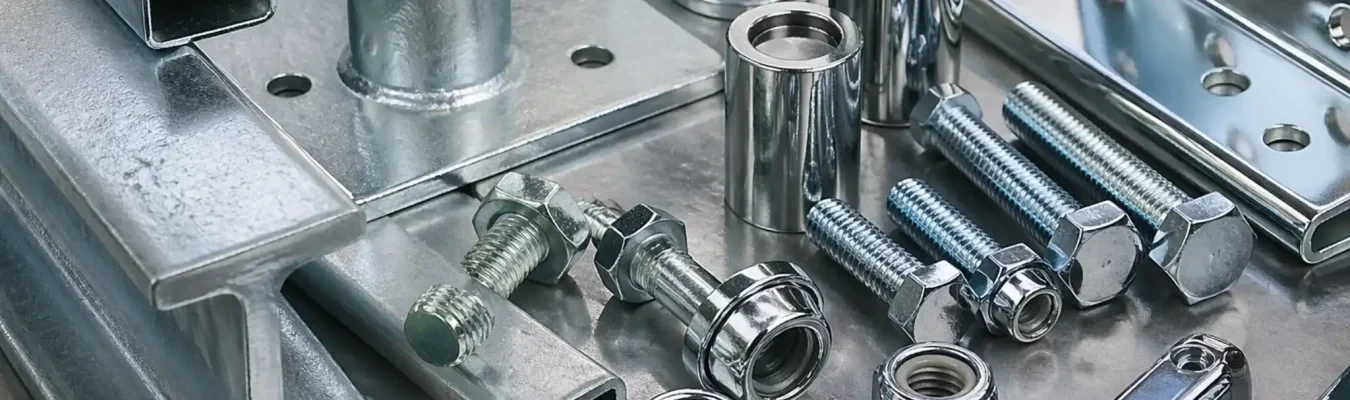
At our Sharjah workshop we handle galvanizing, electroplating, buffing and polishing, and painting of fabricated steel.
Zinc protects steel sacrificially, so small scratches in a galvanized coating stay protected. Galvanized steel can also be painted afterwards, which adds colour and extra life. For a closer comparison, read hot dip galvanizing vs electroplating.
Environment narrows the list further.
How Does the Environment Change the Choice?
The same finish performs very differently indoors and on a coast.
ISO 12944 grades atmospheres in six categories, from C1 (heated, dry interiors) to CX (extreme offshore). Industrial areas and coastal areas with moderate salinity fall in C4. Coastal areas with high salinity fall in C5.
For paint systems in C3 to C5, blast cleaning to Sa 2½ is the usual minimum preparation. The standard also rates durability, with its high class designed to last 15 to 25 years.
Ask which category your site falls into before you choose a system.
The environment sets the target, and fabrication details decide whether you reach it.
How Do Welding and Design Affect the Finish?
Welds, edges, and enclosed sections are where finishes struggle.
- Galvanizing needs vent and drain holes – Trapped air expands in the zinc bath, so ASTM A385 requires holes that let air escape.
- Weld slag blocks galvanizing – Chemical cleaning does not remove flux and slag, so ungalvanized patches form around the weld. Grit-blast them off first.
- Paint fails first at edges and welds – The film is thin on sharp edges, which is why edge rusting is common and stripe coats are added.
- Plating shows every defect – Electroplating follows the surface and does not level scratches, so buff or brush first. A brushed grain can also hide blemishes.
- Welded stainless needs heat tint removed – Welding leaves discoloured, chromium-depleted metal that corrodes more easily. Pickling, grinding, or electrolytic cleaning removes it before finishing.
Share the weld method and drawings with your finisher early, because these fixes cost far less before fabrication ends.
A clear brief turns these checks into a quote you can compare.
What Should You Tell Your Finisher?
Six details let a finisher recommend the right system.
- The base metal – Steel, stainless steel, aluminium, brass, or copper.
- The environment – Indoor or outdoor, coastal or industrial.
- The expected life – Years before major maintenance.
- The appearance – Colour, bright, polished, or brushed.
- The weld method and any enclosed sections – These decide venting and cleaning.
- The quantity and part size – Both decide how parts are racked or dipped.
Send us your drawings or part and these details, and we will recommend a finish before we quote. Request a metal fabrication quote.
The questions below cover what buyers ask before they order.
Frequently Asked Questions
Should metal be finished before or after fabrication?
After, in most cases. Welding, cutting, and bending change the surface, and galvanizing is meant for parts already in their final shape.
Can galvanized steel be painted?
Yes. A paint coat over galvanizing is called a duplex system, and it adds colour and extra protection.
Does plating hide scratches and weld marks?
No. Plating follows the surface, so buff or brush defects out first.
Can aluminium be anodized or plated?
Aluminium takes anodizing, which builds an oxide layer. It can also be plated with extra preparation layers. Anodizing does not work on steel.
How do you choose a metal finishing company?
Ask which standards it works to, such as ASTM A123 for galvanizing or ISO 12944 for paint systems. Ask how it cleans welds, how it checks coating thickness, and whether it can fabricate and finish your parts. Metal finishers differ widely in what they cover.
What finish suits outdoor steel in a coastal area?
Galvanizing, with a paint coat over it where needed, suits many outdoor steel parts. Match the system to your ISO 12944 category and confirm it with your finisher.