Key Takeaways
- Silver plating services coat a base metal with a thin silver layer using an electric current.
- Conventional baths hold potassium silver cyanide, and a silver strike goes down first to secure adhesion.
- ASTM B700 references about 1 micron for solderability and about 20 microns for hotel flatware.
- Silver tarnishes as a sulfide film forms, so lacquer or anti-tarnish treatment protects it.
- Brief your plater on base metal, use, finish, thickness and quantity before you ask for a quote.
In This Article
- What Is Silver Plating?
- How Do Silver Plating Services Work?
- Which Metals Can Take Silver Plating?
- How Thick Should Silver Plating Be?
- Where Is Silver Plating Used?
- Why Does Silver Plating Tarnish?
- Which Silver Finish Should You Choose?
- What Should You Tell Your Silver Plater?
- Frequently Asked Questions
Silver plating puts a thin, bright layer of silver on a stronger base metal.
Silver plating services clean a part, prepare it and deposit silver on it in an electrolytic bath. The coating gives a bright white finish and high electrical and thermal conductivity. ASTM B700 lists solderable surfaces, electrical contacts and wear surfaces among its uses.
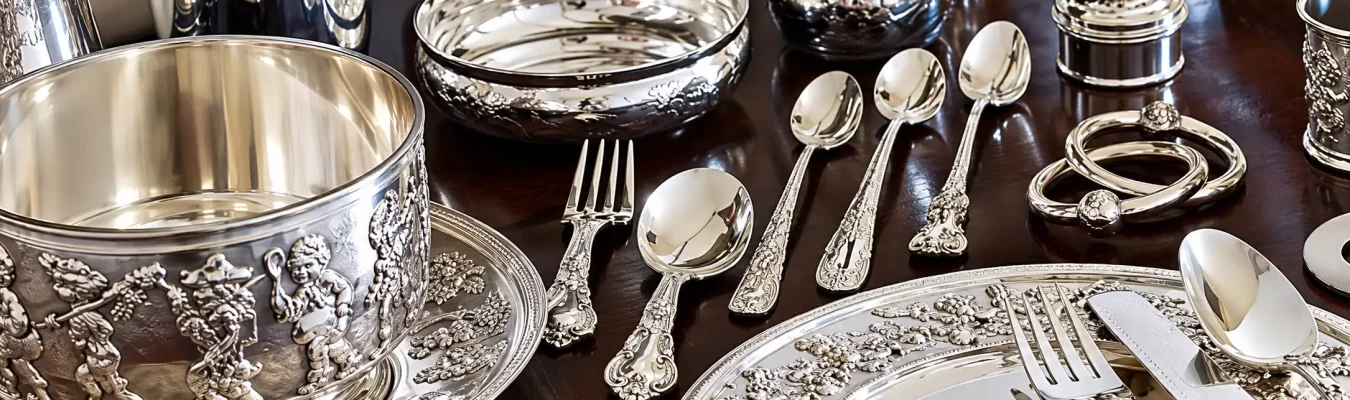
At Al Asriah Metal Coating in Sharjah, we plate silver on cutlery, trays, decorative items and copper bus bars. Our bright silver plating services reach customers across Sharjah, Dubai and Abu Dhabi.
What Is Silver Plating?
Silver plating is a process that deposits a thin layer of silver on another metal using electric current.
The part sits in a bath and acts as the cathode. Silver from the bath settles on it as solid metal, and silver anodes dissolve to replace what the bath loses. The result looks like silver without the weight and metal cost of a solid silver part.
ASTM B700 covers coatings with at least 98 percent silver. It sorts them into three types by minimum purity: 99.9, 99.0 and 98.0 percent.
The bath chemistry explains why preparation matters so much.
How Do Silver Plating Services Work?
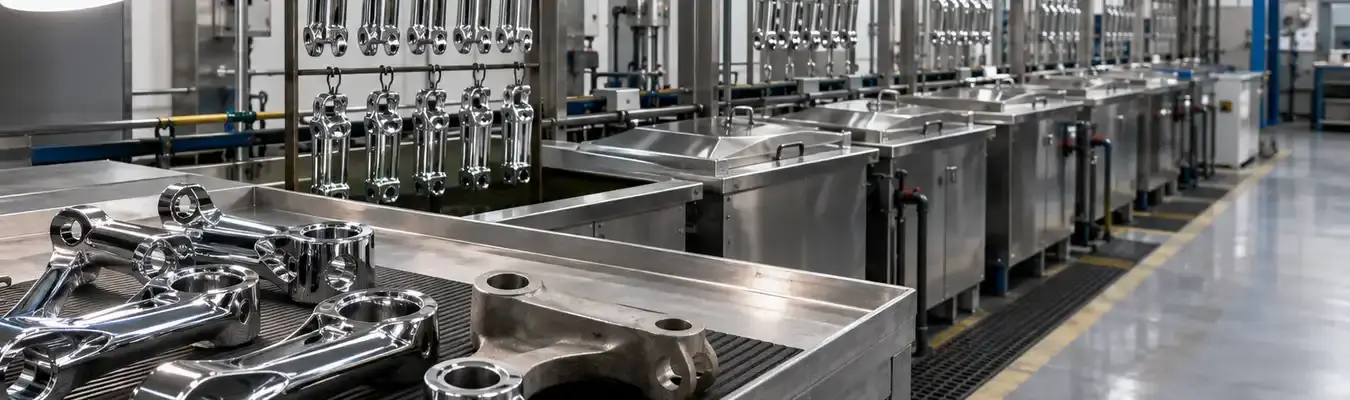
A silver plating line cleans the part, adds a strike layer, then builds the silver coating in a bath.
- Clean. Remove oil, oxide and polishing residue so the silver can bond.
- Undercoat. Add nickel or copper first on metals that need it.
- Strike. Plate a thin first layer from a bath with very low silver and high free cyanide.
- Plate. Build the silver to the thickness on your drawing.
- Finish. Rinse, apply anti-tarnish or lacquer, and polish if the job needs it.
The NMFRC guide says conventional baths hold silver as potassium silver cyanide. It forms when silver anodes dissolve in potassium cyanide solution. Silver nitrate is not the usual production bath.
The strike exists for a reason. Cyanide silver baths form immersion deposits on less noble metals, and these cause poor adhesion. A strike from a low-silver bath prevents that.
Cyanide-free silver processes exist. Technic sells one that plates on bright nickel after a silver strike. Cyanide salts are toxic, so plating shops need ventilation and trained handling.
The right undercoat depends on the metal you bring us.
Which Metals Can Take Silver Plating?
Copper, brass, steel and zinc alloys can take silver plating, usually over an undercoat.
Advanced Plating Technologies summarises ASTM B700 this way: copper and copper alloys need at least 1 micron of nickel under the silver. The same summary says copper alloys without a nickel layer should not run continuously above 149 °C. It also describes nickel, or nickel over copper, under silver on steel, zinc and zinc alloys.
Read our nickel chrome plating guide for more on nickel layers.
Coating thickness varies across a part. State which surfaces matter so the plater can target them.
With the base metal settled, thickness is the decision that follows.
How Thick Should Silver Plating Be?
Thickness depends on the job, from about 1 micron for solderability to 40 microns or more for severe wear.
ASTM B700 sets no mandatory thickness. Its appendix lists reference values, summarised below from the 2008 edition by Advanced Plating Technologies. Treat them as guides, not limits.
| Use | Reference thickness (microns) |
|---|---|
| Short shelf life solderability | about 1 |
| Contact connectors with limited wear | about 2.5 |
| Thermocompression bonding and domestic hollowware | about 5 |
| Medium-quality hollowware and short-life domestic cutlery | about 10 |
| Normal hotel flatware and high-quality domestic flatware | about 20 |
| Very severe wear, such as machine bearings | 40 or more |
Thicker silver needs more metal and more plating time. Tell us the duty, and we will advise on a thickness to match.
Thickness follows the job, so here is where silver plating gets used.
Where Is Silver Plating Used?
Silver plating services suit hotel tableware, decorative items and electrical parts.
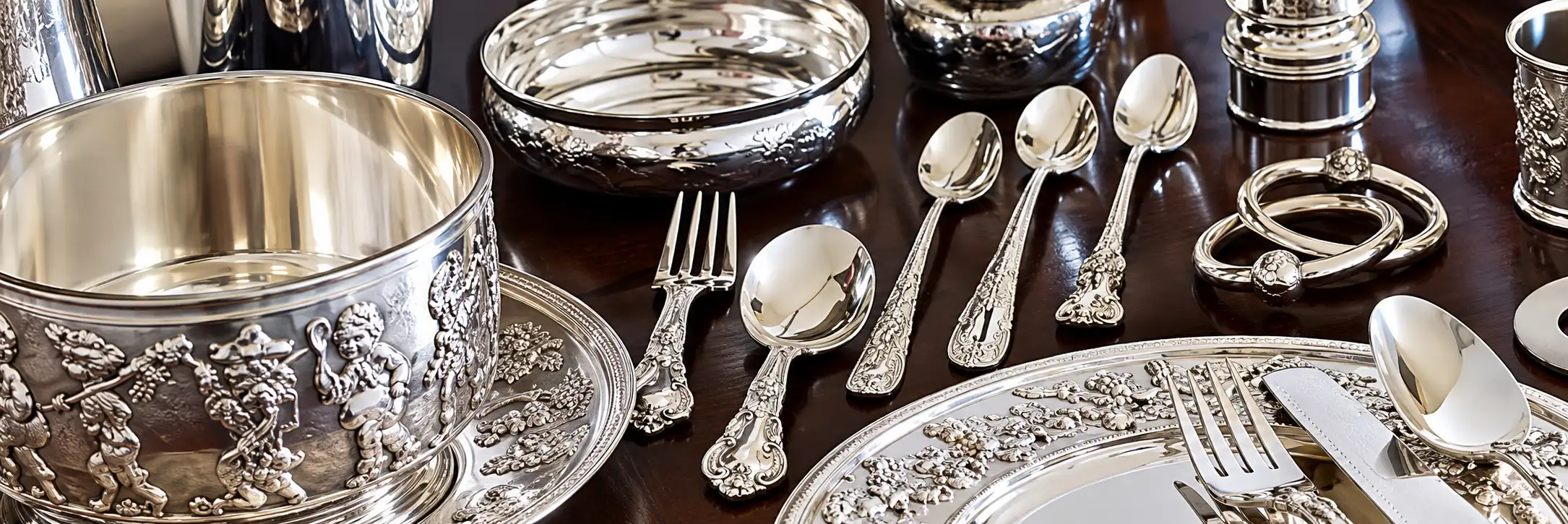
- Hotel tableware: cutlery, trays and other hotel amenities.
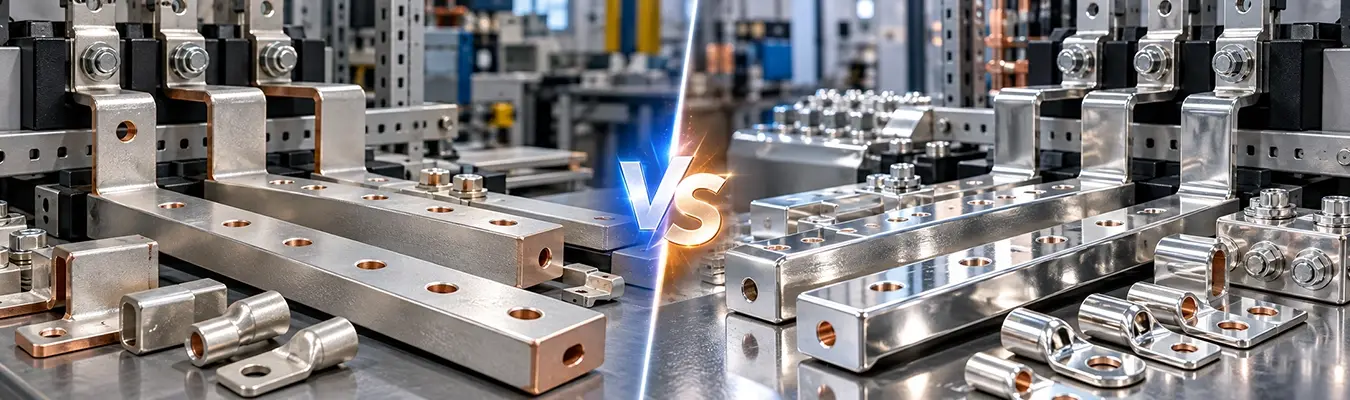
- Switchgear: copper bus bars, where silver carries current well.
- Contacts and connectors: solderable surfaces and electrical contacts.
- Decorative items: a bright white finish on display pieces and decorative hardware.
- Wear surfaces: thicker deposits on load-bearing parts such as bearings.
Silver is one option among several. For a warm tone, look at our gold plating services in Dubai. For an aged look, ask about our antique plating.
Whatever the use, silver reacts with its surroundings, so tarnish needs a plan.
Why Does Silver Plating Tarnish?
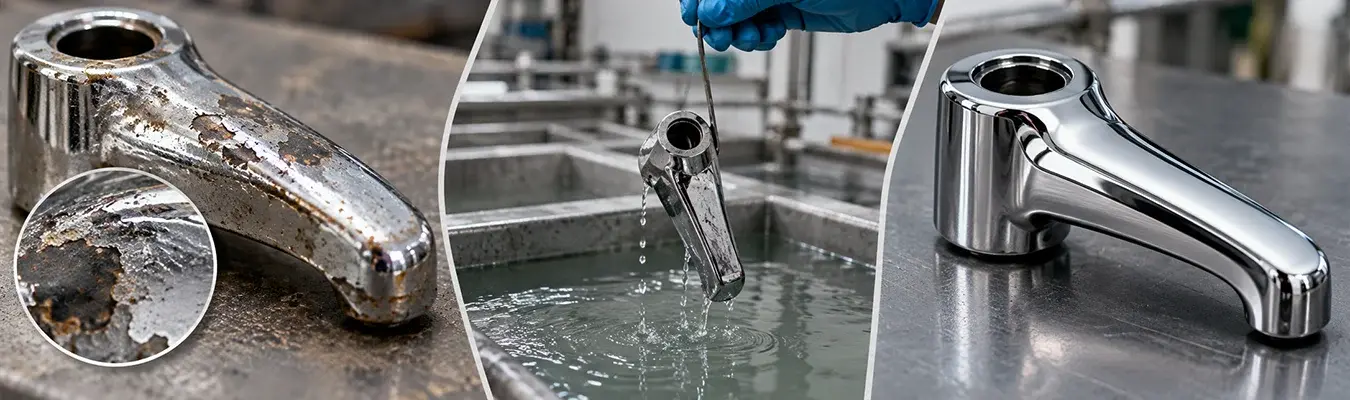
Silver tarnishes in time because a sulfide film forms on its surface.
The NMFRC guide names surface sulfide formation as the cause. Ornamental items can take a clear lacquer. A process sequence shared on finishing.com puts an anti-tarnish dip before the lacquer.
ASTM B700 codes the choice. Class N means no chromate treatment, and Class S means chromate treatment.
Keep silver plated items away from acids and sulfide sources. Abrasive polish removes silver each time, so thin deposits can wear through.
Tarnish protection also shapes the finish you choose.
Which Silver Finish Should You Choose?
You can choose a matt, bright or semibright silver finish, depending on the look and the use.
ASTM B700 sorts silver coatings into four grades.
| Grade | Finish | How it forms |
|---|---|---|
| A | Matt | Plated without brighteners |
| B | Bright | Plated with brighteners in the bath |
| C | Bright | Matt silver polished mechanically or chemically |
| D | Semibright | Plated with addition agents |
A bright silver finish suits tableware and display pieces. Engineering drawings can name the grade, so check yours before ordering. Our mechanical buffing and polishing service can bring a matt deposit to a bright shine.
Once you know the finish, you can brief your plater.
What Should You Tell Your Silver Plater?
Tell your plater the base metal, the use, the finish, the thickness and the quantity.
- The base metal and alloy, such as brass, copper or steel.
- The part size, shape and quantity.
- The end use, such as cutlery, bus bars or contacts.
- The finish: matt, bright or semibright, with or without lacquer.
- The thickness in microns and the surfaces that matter.
- Any drawing or standard, such as ASTM B700.
Surface preparation affects the result. Our guide to buffing vs polishing in metal finishing explains the difference.
Request a silver plating quote, or call us on 06-5341197 or 050-6325954. You can also email alasriah@gmail.com. We reply with advice on the right silver plating service for your part.
The answers below cover common questions about silver plating.
Frequently Asked Questions
Here are short answers to common questions from buyers.
What do silver plating services include?
They include cleaning, an undercoat if needed, a silver strike and the silver plating. Finishing, such as polishing or anti-tarnish treatment, comes last. We confirm the steps for your part when you send details.
Do you offer silver plating in Dubai?
Our workshop is in Industrial Area 10, Sharjah, and we serve Dubai, Abu Dhabi and the wider UAE. Call or email with your part details, and we will advise on the finish.
Where can I find silver plating near me in the UAE?
Our silver plating company is based in Industrial Area 10, Sharjah. Buyers in other emirates can contact us by phone or email to discuss their parts.
How thick should silver plating be on cutlery?
ASTM B700 reference figures list about 10 microns for short-life domestic cutlery and about 20 microns for normal hotel flatware. Confirm the figure with your plater before ordering.
Why has my silver plated item turned dark?
Silver tarnishes through surface sulfide formation. Lacquer or anti-tarnish treatment slows it, and keeping items away from acids and sulfide sources helps.
Can brass or copper be silver plated?
Yes, usually over a nickel undercoat. ASTM B700 summaries call for at least 1 micron of nickel under silver on copper and copper alloys.
The sources below back the figures in this guide.
Sources and further reading
- ASTM International, B700 Standard Specification for Electrodeposited Coatings of Silver for Engineering Use
- Advanced Plating Technologies, ASTM B700-08 specification summary
- NMFRC, Plating and Surface Finishing guide: silver plating
- Technic, Techni Silver Cyless II-W data sheet
- finishing.com, silver strike discussion
- finishing.com, silver tarnish discussion
About Al Asriah Metal Coating
Al Asriah Metal Coating Company LLC is an electroplating and metal finishing company in Industrial Area 10, Sharjah, UAE. We offer silver plating in UAE for customers in Sharjah, Dubai and Abu Dhabi. Call 06-5341197 or 050-6325954, email alasriah@gmail.com, or contact us for a quote.