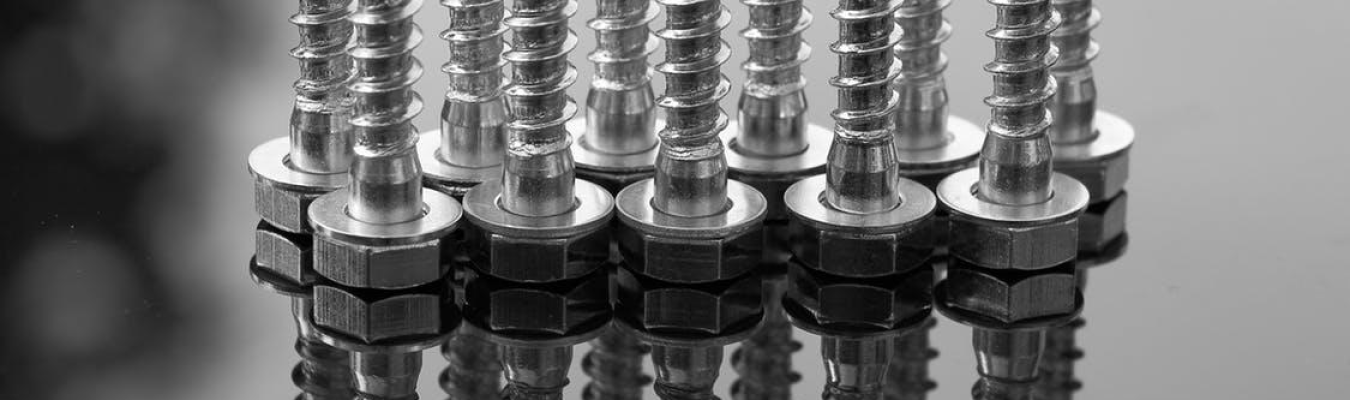
Hard chrome earns its place on parts that rub, slide, or seal, not on parts that only need to look bright.
The benefits of hard chrome plating are high hardness, low friction, wear resistance, moderate corrosion protection, and the ability to rebuild worn parts. They come from a thick chromium layer applied by electroplating. This guide covers each benefit, the limits you need to know, and how to specify the plating.
At Al Asriah Metal Coating in Sharjah, we hard chrome plate hydraulic cylinders, rollers, shafts, dies, and moulds. See our hard chrome plating services for the full range.
In This Article
- What Is Functional Hard Chrome Plating?
- What Are the Benefits of Hard Chrome Plating?
- What Are the Limits of Hard Chrome Plating?
- How Thick Should Hard Chrome Be?
- Where Is Hard Chrome Plating Used?
- When Is Another Coating Better?
- What Should You Tell Your Plater?
- Frequently Asked Questions
What Is Functional Hard Chrome Plating?
Functional hard chrome plating is a thick chromium layer applied for performance, not for looks. The benefits of chrome depend on which type you use.
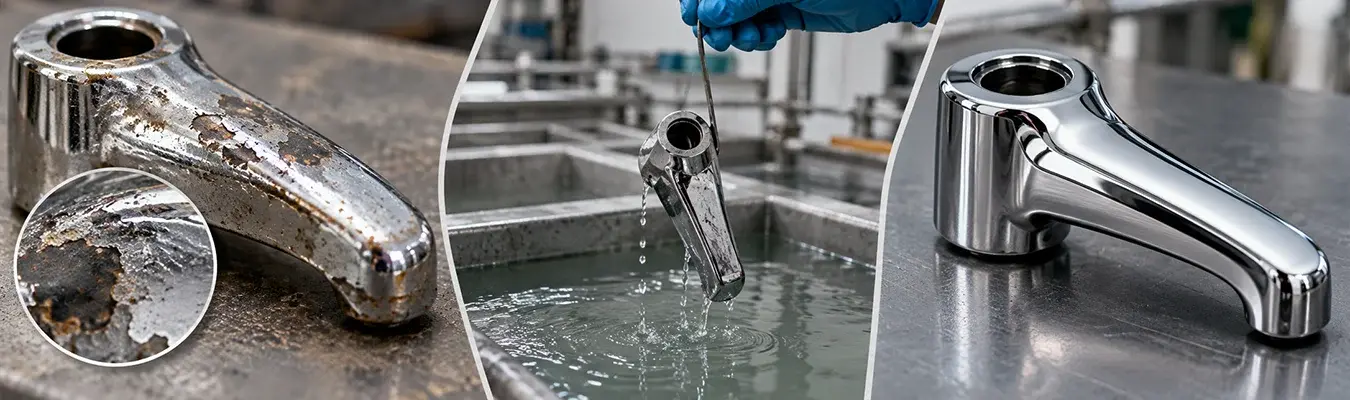
Decorative chrome is the bright finish on taps and bumpers. It is a thin layer, usually under 0.5 micron, laid over nickel. Hard chrome is much thicker, and standard thicknesses on new parts run from 20 to 40 microns.
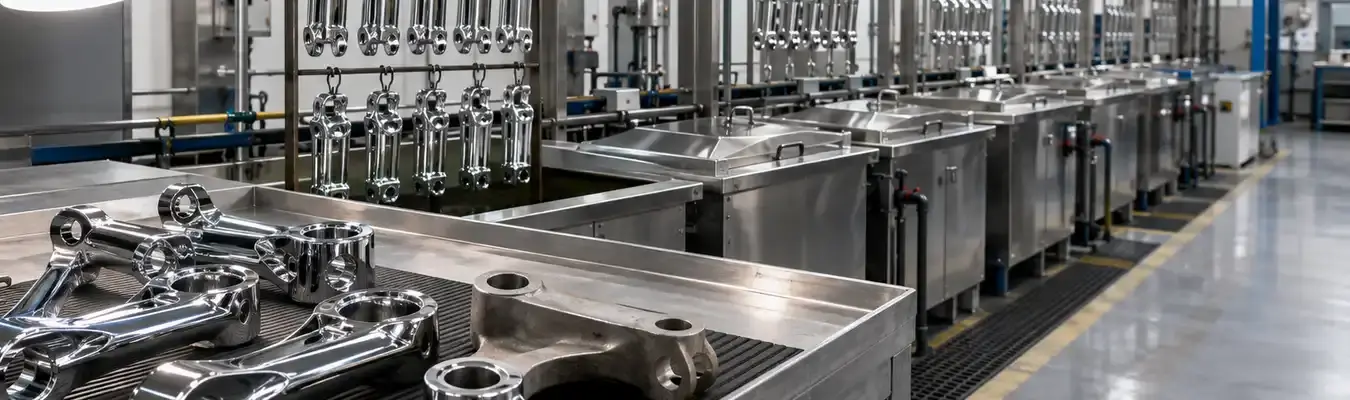
The part sits in a chromic acid bath, and current deposits the chromium. For hard coatings the bath runs at about 50 to 65 degrees Celsius, below the tempering temperature of most steels.
The hard chrome finish reflects the base metal beneath it and can be ground or polished to size and shine.
With the type and the process clear, the benefits are easier to place.
What Are the Benefits of Hard Chrome Plating?
Six benefits explain why engineers specify hard chrome.
- Hardness and wear resistance – Hard chrome measures about 750 to 1,050 HV, while cast iron piston rings measure about 220 to 270 HV.
- Low friction – The friction coefficient of chromium on steel is 0.16, against 0.30 for steel on steel.
- Release and anti-galling – Chromium has low surface energy, so plastic parts release from chromed moulds and moving parts resist seizing.
- Corrosion protection – The layer shields the base metal from moisture and oxidation, with protection that rises with thickness.
- Dimensional restoration – Worn parts can be plated thicker and ground back to size.
- A polishable, cleanable finish – The surface can be polished for sliding fits and is easy to clean and inspect.
Each benefit comes with limits, and those limits shape the specification.
What Are the Limits of Hard Chrome Plating?
Seven limits matter when you specify hard chrome.
- Microcracks limit corrosion protection – Moisture can reach the base metal through the crack network, which is why corrosion-critical parts need a thicker layer or a nickel underlayer. Our process adds a nickel undercoat.
- Fatigue strength can drop – Electroplated chrome can reduce the fatigue performance of steel, and baking after plating helps.
- Hard steel should be baked – ISO 9587 and ASTM B850 recommend hydrogen relief baking above about 31 HRC, according to Pavco.
- The deposit is uneven – Hard chrome has poor throwing power, so it builds up on edges and thins in bores and recesses. Special fixtures or auxiliary anodes are needed.
- It does not level – More thickness amplifies existing roughness, so prepare the surface first.
- Chrome should not run on chrome – Two plated surfaces rubbing together can gall, so plate only one of a mating pair.
- Hexavalent chromium is toxic – Disposal is tightly regulated, so choose a plater that controls emissions and waste.
Thickness is the setting that balances these benefits and limits.
How Thick Should Hard Chrome Be?
Thickness depends on the duty, and it is measured in microns.
| Duty | Chrome thickness |
|---|---|
| Wear and atmospheric corrosion on tooling | 5 to 10 microns (0.0002 to 0.0004 inch) |
| Resistance to chemical attack | 13 to 50 microns (0.0005 to 0.002 inch) |
| Standard new parts | 20 to 40 microns |
| Extreme wear or salvage | 100 microns or more, then ground to size |
Tooling uses thinner layers than most engineering parts, and suppliers set these ranges differently, so confirm the figure for your part. Thicker deposits cost more and may need grinding to size, so ask how thickness is checked.
Duty and thickness together point to where hard chrome fits best.
Where Is Hard Chrome Plating Used?
Hard chrome suits parts that slide, rotate, seal, or form material.
- Hydraulics – Pistons, hydraulic cylinders, and rods.
- Rollers and shafts – Print rollers, conveyor rollers, pump shafts, and driveshafts.
- Tooling – Dies, moulds, press punches, and screws.
- Machinery – Valves, pumps, and equipment for food, timber, paper, textile, agriculture, and mining plants.
Decorative parts such as taps and trim need decorative nickel chrome instead.
Some jobs call for a different coating altogether.
When Is Another Coating Better?
Hard chrome is not always the right answer.
- Deep bores and complex shapes – Electroless nickel gives a more even layer thickness.
- Fatigue-critical steel – Alternatives such as thermal spray are used where plating-related fatigue loss is unacceptable.
- Lower hazard – Trivalent chromium is much less hazardous, although thicker deposits do not match the corrosion resistance of hexavalent chrome.
Choose the coating after you define the duty, then brief your plater.
What Should You Tell Your Plater?
Six details let a plater specify the right chrome.
- The duty – Sliding, rotating, sealing, static, or forming.
- The base metal and hardness – Steel grade and HRC decide whether a bake is needed.
- The thickness, in microns, and where – Ask for a number, not a label.
- The finish and tolerance – As plated, ground, or polished to size.
- The geometry – Bores, recesses, and sharp edges change how chrome deposits.
- The mating surface – Avoid chrome rubbing on chrome.
Send us your part, drawing, and duty, and we will advise on thickness and finish before we quote. Request a hard chrome quote.
The questions below cover what buyers ask after they read the specification.
Frequently Asked Questions
Is chrome durable?
Yes, for wear and moderate corrosion, within limits. Durability depends on thickness, the base steel, surface preparation, and whether the part sees impact or chemical attack.
What are two advantages of chromium plating?
Hardness with wear resistance, and low friction. Hard chrome also gives moderate corrosion protection and lets worn parts be rebuilt.
Is hard chrome plating on stainless steel possible?
Yes, but stainless steel needs its own activation step before plating, because its passive surface film resists bonding. Ask your plater how it is prepared.
Can worn parts be rebuilt with hard chrome?
Yes. The part is plated thicker and then ground or polished back to size, so restoration can cost less than replacement.
Is hard chrome plating safe for the environment?
Hexavalent chromium is toxic and tightly regulated, so a plater must control emissions and waste. Trivalent chromium and other coatings suit some jobs.