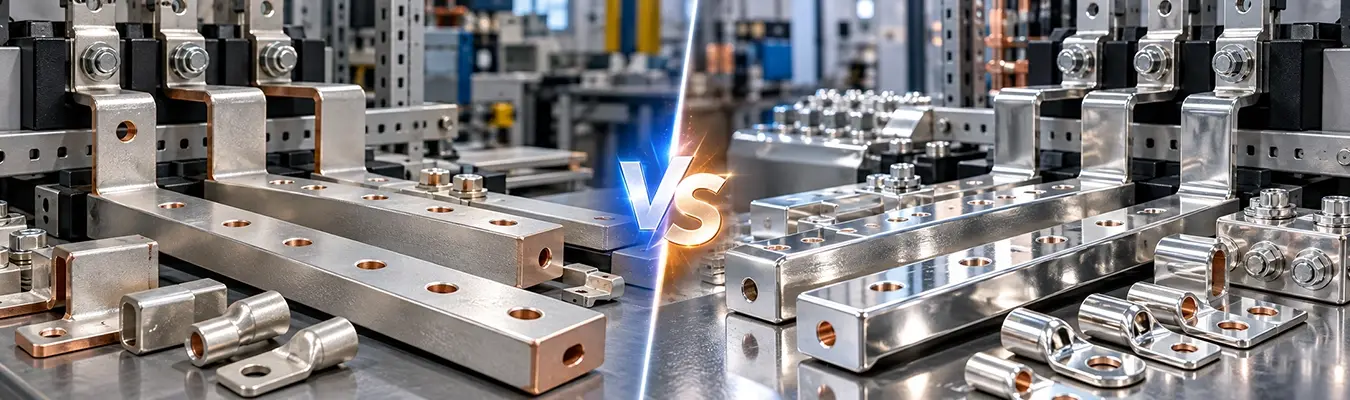
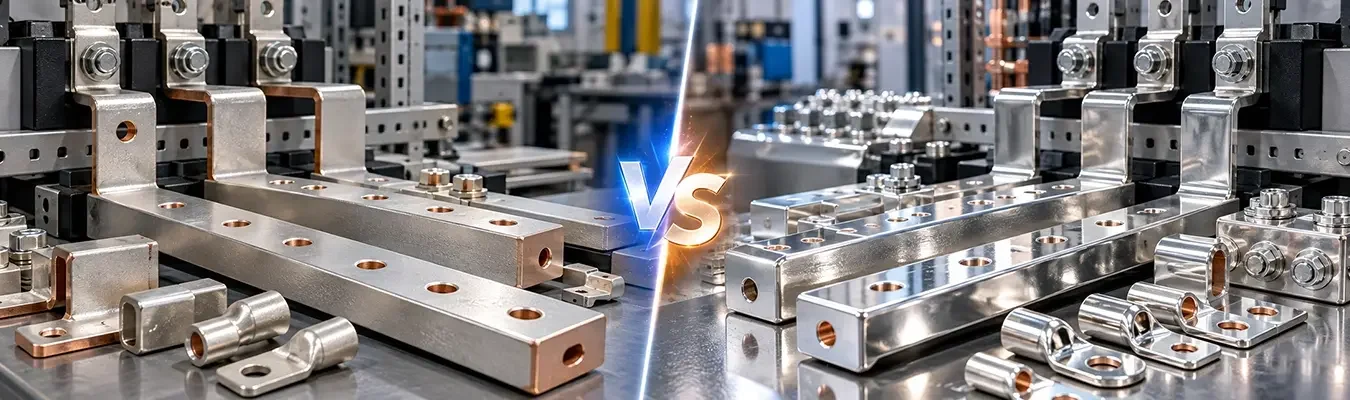
Copper busbars carry power in distribution systems, switchgear, control panels, and power equipment because copper conducts electricity so well. Copper also oxidises over time, and the oxide film can weaken an electrical connection. A suitable metal coating protects the surface and keeps contact performance steady.
When comparing tin vs silver plating, the right choice depends on electrical conductivity, corrosion protection, operating temperature, the application, and budget.
Tin plating usually costs less and suits many electrical components. Silver plating suits applications that need excellent conductivity and dependable contact performance.
What Is Busbar Plating?
Busbar plating is a thin metal coating on copper busbars and other electrical components that protects the surface and supports good contact.
The main benefits include:
- Protection against surface oxidation and corrosion.
- Steadier electrical contact between joined parts.
- Better solderability for suitable applications.
- A longer service life when the coating is correctly specified.
Tin and silver are two common plating metals, and each suits different duties. We offer both as bright finishes, including bright silver plating for switchgear parts.
Tin comes first because it suits many static bolted joints.
Tin Plating for Copper Busbars and Electrical Components
Tin plating puts a layer of tin on a copper surface to give corrosion protection, good solderability, and a low-cost finish. Busbar tin plating is a common choice for parts with static joints. Tin plating on copper also suits terminals and other components that need soldered connections.
Benefits of Tin Plating
- Lower cost: Tin costs less than silver, which helps on projects with many electrical components.
- Good solderability: Tin-plated surfaces suit parts that need soldered connections.
- Surface protection: Tin shields copper from direct exposure to the surrounding air.
- Suits static connections: A tin plated copper busbar can serve many bolted electrical connections when the coating and operating conditions meet the specification.
Common Applications
- Copper busbars in distribution panels.
- Electrical terminals and connecting lugs.
- Static bolted connections.
- Electrical components that need solderability.
Tin plating also has limits. Heat, repeated contact movement, and wear can affect its performance, so check the operating conditions before you choose this finish.
For businesses that need tin plating in Dubai, an experienced metal coating company can confirm that the process meets the requirements of the component.
Silver plating covers the harder electrical duties, so we look at it now.
Silver Plating for Copper Busbars and Switchgear
Silver has the highest electrical conductivity of any metal, which makes silver plating a fit for demanding electrical duties. Silver plating puts a layer of silver on a metal surface to lower contact resistance. A silver plated busbar is common in switchgear assemblies, breaker contacts, electrical links, and other parts where low contact resistance matters.
Benefits of Silver Plating
- Excellent conductivity: Silver suits electrical contacts where low contact resistance is the goal.
- Dependable contact performance: It serves selected switchgear and breaker applications where a stable connection is needed.
- Suits demanding duties: Silver plating can suit certain contacts at higher temperatures when the coating and assembly are correctly specified.
Common Applications
- Copper busbars and electrical links.
- Switchgear contact surfaces.
- Circuit breaker contacts.
- Disconnecting and sliding electrical contacts.
The main drawback of silver plating is its higher cost. Silver can also tarnish in air that contains sulphur compounds, so check the operating environment.
For industrial silver plating for switchgear, the coating should meet the specification of the equipment manufacturer. Our guide to silver plating services across the UAE explains the process in more detail.
Both finishes have clear strengths, so a side-by-side view helps.
Tin vs Silver Plating: Key Differences
Tin costs less and solders well, while silver conducts better and suits switching contacts.
| Factor | Tin Plating | Silver Plating |
|---|---|---|
| Electrical conductivity | Lower than silver | Excellent |
| Relative cost | Economical | Higher |
| Corrosion protection | Suits many indoor applications | Suits many applications, but sulphur in the air can tarnish it |
| Solderability | Good on fresh coatings | Solderable, but tarnish can affect it |
| Common applications | Busbars, terminals, static connections | Switchgear contacts, breaker points, electrical links |
| Best suited for | Low-cost protection and many static connections | Applications that need excellent contact conductivity |
The table shows the trade-offs, and the section below shows how to match them to your part.
How to Choose the Right Plating for Your Application
In a tin vs silver plating decision, neither finish is better in every case. The right choice depends on the function of the component and its operating conditions.
Choose tin plating when:
- Cost control matters.
- The component uses a suitable static bolted connection.
- You need good solderability.
- Operating temperatures suit tin plating.
Choose silver plating when:
- Low electrical contact resistance is the priority.
- The component serves in suitable switching or sliding contacts.
- The equipment specification calls for silver plating.
- The gain in performance justifies the extra cost.
Before you decide, consider operating temperature, environmental exposure, contact design, coating thickness, and the relevant equipment specifications.
Thickness is a detail that needs its own check, so we cover it now.
Why Does Plating Thickness Matter?
In tin vs silver plating, thickness affects surface protection, coating life, and contact performance. A coating that is too thin or uneven may not give the protection you intend.
When you specify tin plating for electrical components or silver-plated busbars, consider:
- Coating thickness: Follow the engineering specification.
- Surface preparation: Thorough cleaning helps the coating bond to the base metal.
- Surface coverage: Make sure the required contact areas carry a full coating.
- Dimensional tolerances: Allow for plating on threads and closely fitted components.
The right thickness depends on the component, the operating environment, and the requirements of the manufacturer.
Bent or drilled copper bars need the same planning, and our metal fabrication works handle copper alongside aluminium, steel, and brass. Our guide to metal fabrication finishing shows how finishing fits into fabricated parts.
Thickness is one detail to share with a plating supplier, so the section below covers what to send.
Tin and Silver Plating Services in the UAE
We are Al Asriah Metal Coating LLC in Sharjah, UAE, and we offer bright tin plating and bright silver plating. Our silver plating serves the switchgear industry, including copper bus bars, links, and breaker points.
Businesses looking for tin plating in Dubai or silver plating in UAE should confirm the coating requirements before placing an order. A silver plating service or tin plating supplier can quote more accurately when it knows the full specification.
When you discuss your project with a plating supplier, share the component dimensions, base material, required coating thickness, operating conditions, and applicable technical specifications.
Tin and silver are electroplated finishes. Our guide to hot dip galvanizing vs electroplating shows how electroplating differs from hot dip coating.
Visit our website to learn more about our metal coating services.
The answers below cover the main questions about tin and silver plating.
Frequently Asked Questions
These answers sum up the main points of the tin vs silver plating comparison.
What is the main difference between tin vs silver plating?
Tin plating costs less and offers good solderability. Silver plating conducts better and suits electrical contacts that need low contact resistance.
Is a tin-plated copper busbar suitable for switchgear?
Yes, in many cases. Tin-plated copper busbars suit many switchgear applications, mainly static bolted connections, when the coating and operating conditions meet the equipment requirements.
Why is silver plating used for electrical switchgear?
Silver conducts better than any other metal, so it suits selected switchgear contacts, breaker points, and electrical links where a dependable connection matters.
Is silver plating better than tin plating for corrosion protection?
Not in every environment. Both coatings protect under suitable conditions. Tin suits many indoor electrical applications, while silver can tarnish where sulphur compounds are present.
Where can I find tin and silver plating services in the UAE?
Al Asriah Metal Coating LLC in Sharjah offers bright tin plating and bright silver plating. Visit our website to discuss your requirements.
The summary below pulls these answers together.
Final words
The right finish depends on the application, the operating environment, the performance target, and the budget.
Tin plating is usually a low-cost choice for copper busbars, terminals, and many static electrical connections. Silver plating suits applications where excellent conductivity and steady electrical contact are the priority. In the tin vs silver plating decision, the equipment specification has the final say.
For busbar plating and electrical component finishing, request a tin or silver plating quote from Al Asriah Metal Coating LLC in Sharjah.