Quick Summary: Hydraulic cylinder rod hard chrome plating restores a worn rod surface when the steel underneath is still sound. Re-chroming suits scratches, shallow corrosion and peeling chrome, while bending, cracks and deep pitting call for a new rod. A proper inspection after the old chrome is stripped settles the decision.
A damaged rod does not always mean a new rod.
Hydraulic cylinder rods work under constant pressure, friction and heavy loads. Over time, their chrome-plated surfaces can develop scratches, rust, pitting or peeling. This damage can affect seal performance, cause hydraulic oil leakage and lower equipment performance.
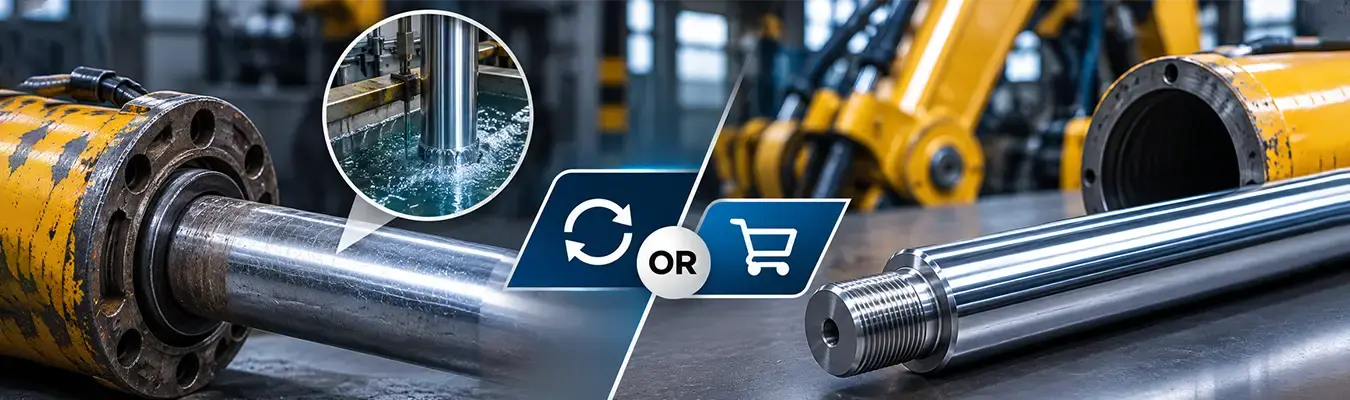
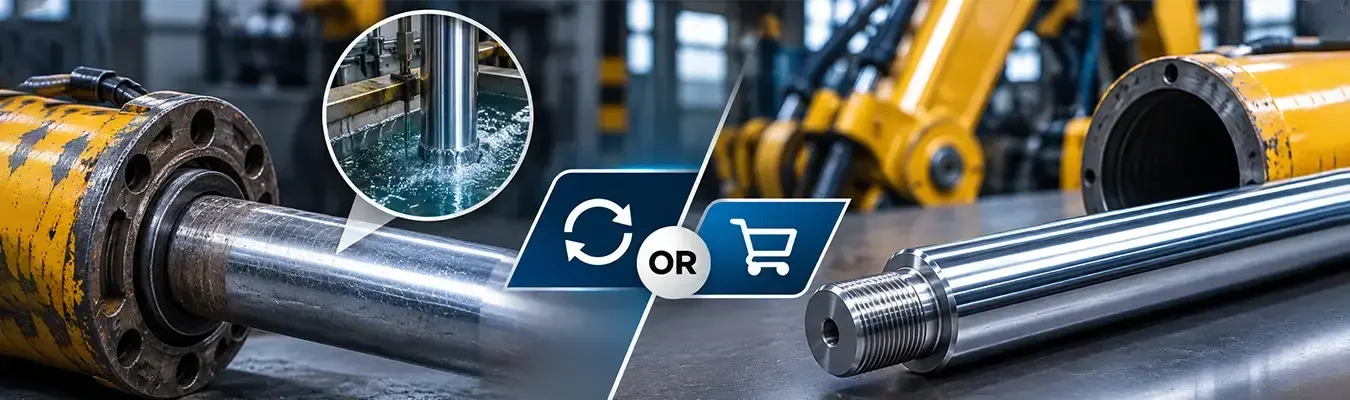
When a hydraulic rod becomes damaged, should you re-chrome it or replace it?
Replacing the entire rod can be expensive for large or custom-made components. Re-chroming can be a more economical option if the underlying steel is still in good condition.
Hydraulic cylinder rod hard chrome plating restores the rod’s working surface and adds wear and corrosion resistance. The right solution depends on the type and extent of damage.
At Al Asriah Metal Coating in Sharjah, we offer hard chrome plating services in Sharjah. This guide explains when re-chroming makes sense and when replacement is the safer choice.
What Is Hard Chrome Plating for Hydraulic Cylinder Rods?
Hard chrome plating is an electroplating process that deposits a layer of chromium onto a metal surface.
Decorative finishes, such as those in our guide to nickel chrome plating, focus on appearance. Industrial hard chrome plating adds functional properties to components exposed to friction, wear and demanding operating conditions.
For hydraulic cylinder rods, the coating gives:
- Wear resistance: Protects the rod against repeated friction and contact with seals.
- Surface hardness: Helps resist scratches and mechanical wear.
- Corrosion resistance: Protects the underlying steel from moisture and corrosive exposure.
- Smooth surface finish: Supports proper movement through the seals and helps prevent premature seal wear.
The coating must have the correct thickness, hardness, adhesion and surface finish to perform properly. Even a well-plated rod wears out, so it helps to know what damages the coating.
Why Do Hydraulic Cylinder Rods Need Re-chroming?
The chrome on a hydraulic rod deteriorates through operating conditions, contamination and regular wear. Some common causes include:
- Scratches and surface wear: Dust and metal particles trapped between the rod and seals can create scratches and grooves as the rod moves.
- Rust and corrosion: Moisture and chemicals can damage the chrome layer, exposing the underlying steel to corrosion and pitting.
- Chrome peeling: Poor coating adhesion or corrosion beneath the chrome layer can cause it to separate from the base material.
- Misalignment and heavy loads: Excessive side loading, vibration and incorrect alignment can cause uneven wear and damage to the rod surface.
- Damaged seals and wipers: Worn sealing components allow dirt and moisture to reach the rod, raising the risk of surface damage.
Common warning signs include visible scratches, rust spots, chrome flaking, hydraulic oil leakage and repeated seal failure. Spotting them early keeps hydraulic rod repair limited to the coating.
Our guide to nickel chrome plating problems covers similar failure causes on decorative chrome. Once damage shows, the decision is between re-chroming and replacement.
Hydraulic Cylinder Re-chroming vs Replacement: Which Is Better?
Both options can restore hydraulic cylinder performance, but they suit different types of damage.
| Factor | Re-chroming | Replacement |
|---|---|---|
| Purpose | Restores the damaged chrome surface | Replaces the existing rod |
| Rod condition | Base material must be sound | Suits severely damaged rods |
| Process | Stripping, plating, grinding and finishing | Manufacturing or sourcing a new rod |
| Cost | Can reduce replacement costs | May involve higher material and manufacturing costs |
| Best suited for | Surface wear and repairable coating damage | Cracks, severe bending and structural damage |
The main difference is that re-chroming restores the surface, not the structural strength of the rod. For small-diameter rods, machining a new rod from hard-chrome-plated bar can cost less, according to Machinery Lubrication.
The first question is when re-chroming is the right call.
When Should You Choose Re-chroming?
Hydraulic cylinder re-chroming suits cases where the damage is limited to the chrome layer and the underlying steel is in good condition. Consider re-chroming when:
- The chrome coating is worn, scratched or peeling, but the base material is sound.
- Surface corrosion can be removed without affecting the rod’s strength or dimensions.
- The rod is straight and has no structural cracks.
- The original dimensions can be restored through plating and precision grinding.
- Repair costs less than manufacturing or sourcing a replacement rod.
Re-chroming hydraulic rams and other large components can reduce material costs and equipment downtime. Some damage cannot be fixed by plating, so it helps to know the limits.
When Should You Replace the Rod?
Re-chroming does not suit every type of damage. Replacement may be necessary when:
- The rod has severe bending or deformation.
- Deep corrosion or pitting has compromised the underlying steel.
- Cracks are found in the base material.
- Threads or mounting ends are damaged beyond practical repair.
- Repeated repairs have reduced the rod’s dimensions beyond acceptable limits.
A new chrome layer cannot correct these structural problems. In such cases, replacing the rod is the safer option.
The final decision should rest on a proper inspection, after the existing chrome coating has been removed. If the rod passes that check, the re-chroming process can begin.
CAN YOUR DAMAGED ROD BE SAVED?
Send us the rod size, the type of damage and where it works, and we will assess whether re-chroming suits it.
How Does the Hydraulic Cylinder Rod Re-chroming Process Work?
Professional re-chroming follows set steps to restore the rod’s surface and bring it back to specification.
- Inspection: The rod is checked for scratches, corrosion, pitting, bending and other damage. Its diameter and straightness are also measured.
- Chrome removal: The damaged chrome layer is removed through a suitable stripping or grinding process.
- Surface preparation: The exposed steel is cleaned and inspected for corrosion, pitting and other defects.
- Chrome plating: A new chrome layer is deposited onto the prepared surface through a controlled electroplating process. The thickness depends on the component’s requirements, and NMFRC notes that no single industry standard sets it for re-chromed rods.
- Grinding and finishing: The plated rod is precision-ground to reach the required diameter, roundness and surface finish.
- Final inspection: The finished rod is checked for coating thickness, hardness, surface roughness and dimensional accuracy, as the specification requires.
Proper surface preparation, coating adhesion and finishing decide how long the result lasts. A well-plated rod still needs care in service.
How to Maintain Chrome-Plated Hydraulic Rods
Regular maintenance prevents premature wear and extends the service life of chrome-plated rods.
- Inspect the rod regularly for scratches, rust and chrome peeling.
- Replace worn or damaged seals and wipers.
- Keep exposed rod surfaces clean and free from contaminants.
- Check cylinder alignment to prevent uneven loading.
- Use hydraulic fluid that meets the equipment manufacturer’s specifications.
- Investigate repeated seal failures instead of replacing the seals alone.
These practices prevent recurring damage and reduce the need for frequent repairs. Our guide to the benefits of hard chrome plating explains what the coating gives a well-kept rod.
Final Thoughts
When a hydraulic rod becomes worn or corroded, replacing the entire component may not be necessary. Professional hard chrome plating can restore suitable rods and extend their service life.
At Al Asriah Metal Coating Company LLC, we offer hard chrome plating in Sharjah and across the UAE. Applications include hard chrome plating for pistons and piston rods, hydraulic cylinders, hydraulic rams, shafts, rollers, and moulds and dies.
Our process covers component assessment, surface preparation, nickel undercoat application, controlled chrome electroplating, grinding, finishing and final inspection.
If you need hydraulic cylinder re-chroming, have the component inspected to find out whether the existing material can be restored to specification.
SEND US YOUR ROD DETAILS FOR A QUOTE
Share the rod dimensions, the damage you can see and the equipment it belongs to, and our Sharjah team will advise on re-chroming.
Frequently Asked Questions
Can a damaged hydraulic cylinder rod be re-chromed?
Yes. A damaged rod can be re-chromed if the damage is limited to the coating and the underlying steel remains structurally sound.
Is re-chroming cheaper than replacing a hydraulic rod?
Re-chroming can be more economical because it reuses the existing rod. The actual cost depends on the extent of damage, repair requirements and replacement specifications, and a new rod can cost less for small diameters.
How long does hard chrome plating last?
Its service life depends on coating quality, operating conditions, maintenance, seal compatibility and exposure to contaminants. No fixed service life applies to every hydraulic rod.
What is the difference between hard chrome and decorative chrome plating?
Hard chrome plating adds hardness and wear resistance for industrial parts. Decorative chrome plating, such as our bright nickel chrome services, mainly serves appearance.
Can hydraulic piston rods and rams be hard chrome plated?
Yes. Hard chrome plating is common on hydraulic piston rods and rams, where it adds surface hardness, wear resistance and corrosion protection.
Where can I get hard chrome plating in Sharjah?
At Al Asriah Metal Coating Company LLC, we offer hard chrome plating in Sharjah for hydraulic rods, rams and other industrial components.